join the next adventure
Join a growing network of curious explorers. Get early access to new trips, insider updates, and connect with people who share your drive for adventure.
Three volcanoes in ten days.
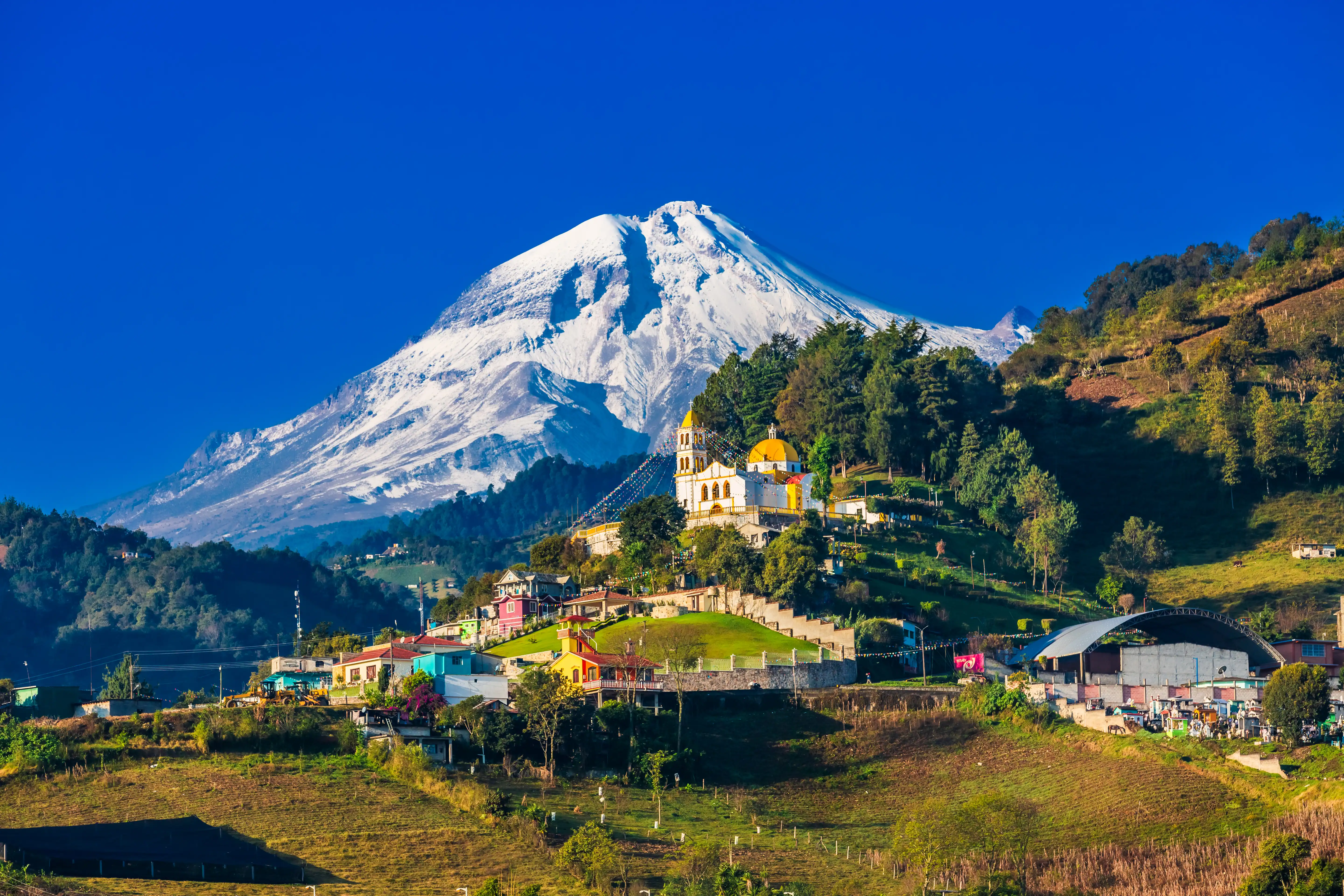
We begin on La Malinche at 4,461 m — non-technical, no permit, no ropes, and the peak every serious operator on this circuit uses to find their altitude legs. Then Iztaccíhuatl, the Sleeping Woman, at 5,215 m — a 1 AM start along her summit ridge with Popocatépetl smoking behind you and the lights of Mexico City below. And finally Pico de Orizaba at 5,636 m: the highest mountain in Mexico, the third highest in North America, and a proper glacier climb with crampons, ice axe and rope teams.
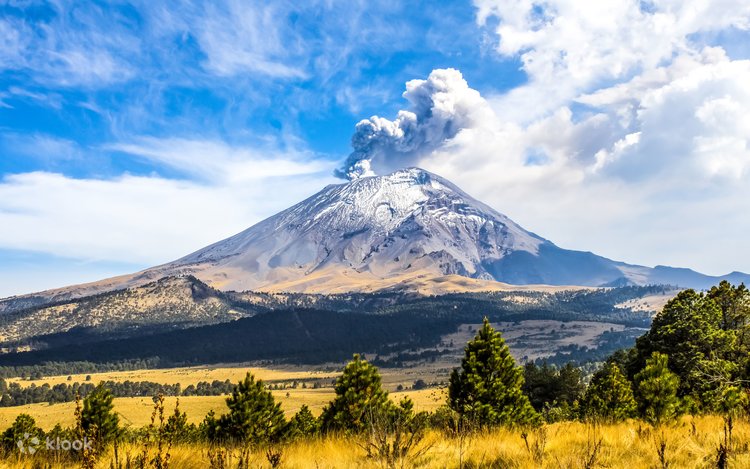
Mexico's four highest peaks are Orizaba, Popocatépetl, Iztaccíhuatl and Nevado de Toluca. We climb two of them — Popocatépetl is actively erupting and closed to climbers, and Nevado de Toluca has been closed by the authorities since 2025.
Everything here serves one thing: arriving at the foot of Orizaba genuinely ready. You sleep higher every night — 2,240 m, then 3,100 m, then 4,000 m, then 4,260 m, then 4,700 m — and by the time you reach high camp you have already stood on a 5,215 m summit. Roughly half of all Orizaba attempts fail, almost always on acclimatisation rather than fitness or weather. This trip is built to put you in the other half.
You don't have to do all ten days. The trip is built in modules, and you choose at booking.
La Malinche and Iztaccíhuatl. Two summits, no glacier, no ropes. A complete trip on its own — you fly home on the 9th having climbed two volcanoes.
Pico de Orizaba. Glacier travel, a high camp at 4,700 m, the highest point in Mexico. Module 2 requires Module 1 — the acclimatisation built across the first week is what makes the summit possible, and turning up fresh for Orizaba is how people fail on it.
Orizaba is scheduled for Friday 11 December, and Saturday the 12th is held in reserve. If the weather shuts the mountain on the Friday, Saturday is your second attempt — same guides, same route. Most operators on this circuit give you one shot and wish you luck.
If the mountain gives you the Friday, that spare Saturday becomes something else entirely: we drive into the Sierra de Zongolica and descend the Sótano de Popócatl. Either way it's part of the trip, not an extra to buy.
Land in the evening, straight from re:Invent. Private transfer to the hotel, about 45 minutes. Sleep at 2,240 m — the acclimatisation starts the moment you land.
Overnight: hotel, Mexico City (2,240 m)
Drive to the cabins at La Malinche's trailhead in Tlaxcala. Afternoon acclimatisation hike, then a night at 3,100 m — nearly a kilometre higher than you slept last night.
Overnight: Centro Vacacional La Malintzi or similar (3,100 m)
Twelve kilometres round trip, 1,275 m of gain, around seven hours, every step above 3,000 m. A marked trail with no permit and no technical ground — just thin air and an early alarm.
Then back down to sleep at 3,100 m. Climb high, sleep low: this is how the next week is built.
Overnight: Centro Vacacional La Malintzi or similar (3,100 m)
Drive to La Joya at roughly 4,000 m, the highest road in Mexico, with a grocery stop in Cholula on the way. Afternoon hike onto the ridge, then a night in tents.
Overnight: tents, La Joya (~4,000 m)
A 1 AM start. The Ayoloco moraine, then the long summit ridge, with Popocatépetl smoking behind you and the lights of Mexico City spread out below. Ten to twelve hours on the move, three guides at one to three.
Descend, then drive to Puebla — about fourteen hours door to door. The longest day of Module 1, and the one you'll talk about.
Overnight: hotel, Puebla (2,160 m)
Module 1 finishes here: transfer to Mexico City and fly home with two volcanoes behind you.
Everyone continuing drives to San Miguel Zoapan, the climbers' village below Orizaba, for lunch at the lodge — then straight into the 4x4 and up to the Piedra Grande base camp at 4,260 m. Dinner at base camp.
Overnight: Piedra Grande, 4,260 m — Module 2 only
Morning at Piedra Grande: a full session on crampons, ice axe, self-arrest and moving as a rope team. This is where you learn the glacier skills if you've never used them.
Then we move up to high camp at 4,700 m. Porters carry the camp — tents, kitchen, water — so you climb with a light pack. Guides set up, you eat early and sleep early.
This is the piece that makes the summit shorter. Most operators on Orizaba go from the hut. We don't.
Overnight: high camp, 4,700 m
Pre-dawn start from 4,700 m. Because you slept high, it's 936 m of climbing to the top instead of the 1,376 m everyone starting from the hut is facing — a materially shorter, materially better summit day.
Up through the rock, then rope up on the Jamapa Glacier and onto the ice. Crater rim around sunrise, with the Gulf of Mexico out east and the whole country below you. The highest point in Mexico and the third highest in North America.
Then all the way down — high camp, base camp, and the 4x4 back to the lodge at Zoapan. Hot shower, celebration dinner, a real bed.
Overnight: lodge, San Miguel Zoapan (3,050 m)
This day belongs to the mountain first. If weather or conditions stopped us on the Friday, today is the second attempt — same guides, same route, one more chance. Most operators on this circuit give you one shot and wish you luck.
If we summited, today is yours. We drive into the Sierra de Zongolica and descend the Sótano de Popócatl: a 45-metre-wide shaft in the forest floor, a 30 m rappel at 70 degrees, then a 50 m free-hang — with a 60 m waterfall falling past you into an underground river at the bottom. Certified local guides, all technical equipment provided, no caving experience required. Around five hours underground.
You'll know which one you're doing by Friday evening. Both are included.
Overnight: hotel, Orizaba city — or San Miguel Zoapan if we're going back up
Long drive back to Mexico City for afternoon or evening flights. Book accordingly — nothing before mid-afternoon.

Fitter than for a hiking holiday, and the honest test is this: two summit days of ten to twelve hours, at altitude, starting in the dark, on consecutive weeks. Iztaccíhuatl is about fourteen hours door to door.
If you can do a long hilly day with a pack and feel fine the next morning, you have the base. What you want between now and December is time on your feet and a lot of vertical — stairs, hills, loaded walks. Cardio in a gym helps, but nothing substitutes for hours of climbing.
If you're unsure whether that's you, message Iryna before you book rather than after. It's a better conversation to have now.
No experience needed. Nobody on this trip has to have worn crampons before.
Day 7 at Piedra Grande is a full teaching session — crampons, ice axe, self-arrest, moving as a rope team — on the morning before we move up to high camp, so you practise the skills a day before you need them. That's the standard way this mountain is guided, and it works because the glacier section isn't technically hard: steep snow and ice, not vertical climbing.
La Malinche is a marked trail. No ropes, no permit, no technical ground.
Iztaccíhuatl is mostly poles. No roping up, no vertical ice — walking and rock scrambling, and poles are the most useful thing you'll carry. You still take crampons and an axe: the Ayoloco glacier was declared extinct in 2021, so what's left in December is seasonal snow and ice on the upper ridge. Some years it's dry rock the whole way, some years the guides put crampons on for the last section. Nobody knows which until you're standing there.
Orizaba is the real glacier day — roped teams on the Jamapa Glacier. That's what the training session is for.
What you can't learn in a morning is fitness and altitude tolerance. That's the part to bring with you.
December is the dry season and the best climbing window of the year — stable high pressure, few afternoon storms, hard-frozen snow for crampons. It's also cold at night, and the cold is what your packing decisions are really about.
City figures are December climate averages. Mountain figures are calculated from them using the standard lapse rate and cross-checked against reported summit conditions — a good guide, not a forecast. Any given night can be colder.
This is why the sleeping bag question matters. See the gear question below.
Roughly half of all Orizaba attempts fail. That's the number across the mountain, and it's worth knowing before you book.
Almost all of those failures are acclimatisation, not fitness and not weather — people fly in, drive to base camp and go up too fast. This itinerary is built specifically against that. You sleep at 2,240 m, then 3,100 m, then 4,000 m, climbing higher each day than you sleep, and you summit Iztaccíhuatl at 5,215 m the day before you move onto Orizaba. Then two more nights going up — 4,260 m, then 4,700 m — before the summit push.
That high camp also shortens summit day to 936 m of climbing, against 1,376 m for anyone starting from the hut. And Saturday 12 December is held in reserve as a second attempt, so you get two chances rather than one.
Nobody can promise you a summit, and anyone who does is selling you something. But this is about as well set up as a ten-day trip can be.
No, and this is the one rule we won't bend.
Module 2 works because of what Module 1 did to your blood. Arriving fresh from sea level for a 5,636 m glacier climb is the single most reliable way to fail on Orizaba — and it's not just your summit at stake, it's the rope team you're tied into.
Module 1 the other way round is fine: six days, two volcanoes, home on the 9th, a complete trip in its own right. Plenty of people will do exactly that.
Mild symptoms — headache, poor sleep, low appetite, breathlessness — are normal above 4,000 m and most people get some of them. The itinerary's whole shape is designed to keep it at that level.
Serious altitude illness is different and it's not something you push through. Our guides watch for it, and the call to turn someone around is theirs, not yours. Descent is the treatment and it's always available — every high point on this trip has a road or a hut below it.
If you've had altitude problems before, tell us. It doesn't rule you out, but we'd rather know in advance. Talk to your doctor about acetazolamide before you travel if you want the option.
We provide almost all of it. You don't need to buy a rack of mountaineering kit to come on this trip.
A note on the sleeping bags. Ours are rated around −7 °C. For the hut and the lodge that's fine. For a night in a tent at 4,700 m, where the low is around −10 °C, it's the bare minimum — the international standard for these peaks is a bag rated to −18 °C / 0 °F. If you sleep cold, bring your own. How well you sleep at altitude is one of the things that decides whether you summit. If you run warm and would rather not carry one, ours will get you through.
Boots are the one technical item not covered — double or plastic mountaineering boots. We're sorting rental options now. If you take EU 46 or larger, tell us as soon as you book: large boots are the hardest size to source in Mexico and we need lead time.
Footwear — mountaineering boots (unless renting); broken-in hiking boots for La Malinche and the approaches; 3–4 pairs mountaineering socks; trainers or sandals for towns and lodges.
Upper body, layers, no cotton — 2 × merino or synthetic base layer; midlayer fleece or light insulated jacket; softshell jacket; waterproof hardshell jacket with helmet-compatible hood; insulated down or synthetic parka for summit mornings.
Lower body — base layer leggings; softshell or trekking trousers; waterproof hardshell trousers with full or ¾ side zips, so they go on over boots and crampons.
Extremities — liner gloves, insulated gloves, warm mitts for summit day; warm hat plus buff or balaclava; sun hat; gaiters unless your trousers have them built in.
Bags — backpack 35–45 L with ice axe and crampon attachment points; large soft-sided duffel for everything else, which travels in the vehicle. Not wheeled, not hard-sided.
The things people forget — headlamp plus spare batteries (three pre-dawn starts, and cold flattens batteries); category 4 glacier sunglasses; ski goggles for summit-day wind; high-factor sun cream and SPF lip balm; 2–3 L water capacity, insulated bottles or a bladder with an insulated hose which will otherwise freeze solid; thermos; personal medication; earplugs; snacks you'll actually force down when appetite disappears above 4,500 m; quick-dry towel and toiletries.
Documents — passport, card, some pesos, and your insurance policy.
Insurance is mandatory and it must cover mountaineering above 5,000 m and helicopter evacuation. Standard travel insurance almost never includes either, and credit-card travel cover essentially never does — check the policy wording rather than the summary page. Send us the policy number once you have it.
Flights. Arrive at Mexico City (MEX) on Thursday 4 December, evening — late is fine, we'll be there whenever you land. Departure depends on your module: Module 1 flies out of MEX on Wednesday 9 December from mid-afternoon; the full trip flies out on Sunday 13 December, afternoon or evening only, because we're driving four hours from the mountains that morning.
Send us your flight numbers once they're booked.
We’re constantly planning new trips. Join our newsletter and be the first to discover upcoming experiences before they’re announced.

Get early access to Apprify and be among the first brokers to try the new standard of mortgage qualification.