join the next adventure
Join a growing network of curious explorers. Get early access to new trips, insider updates, and connect with people who share your drive for adventure.
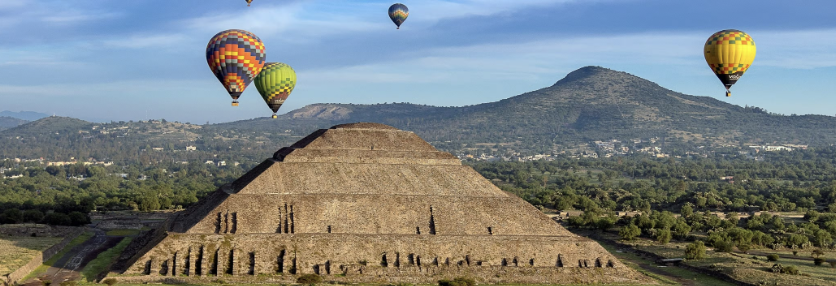
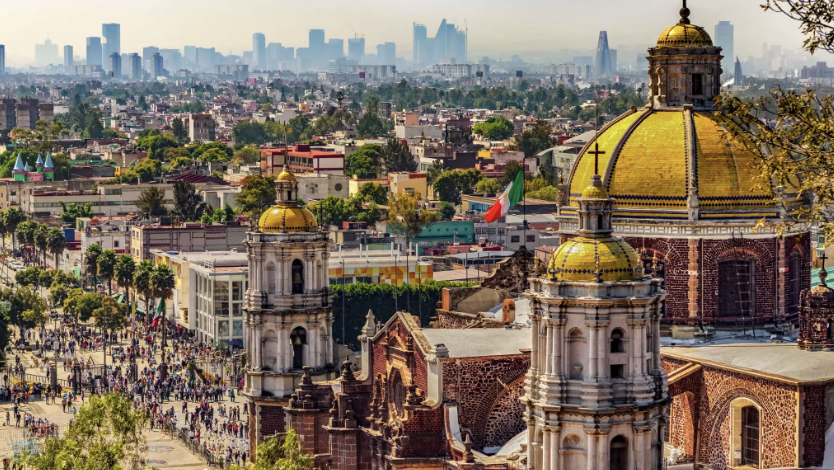
Two halves. First Mexico City, where you get up at 04:30 and watch the sun come up over Teotihuacán from a hot-air balloon — a city of maybe 125,000 people that was already abandoned and nameless when the Aztecs found it and decided gods must have built it.
Then Baja California: a thousand kilometres of cactus desert with the Sea of Cortez on one side. Long drives, empty road, turquoise bays that appear out of nothing, and fish tacos on the sand. This is a road trip, and the driving is part of it.
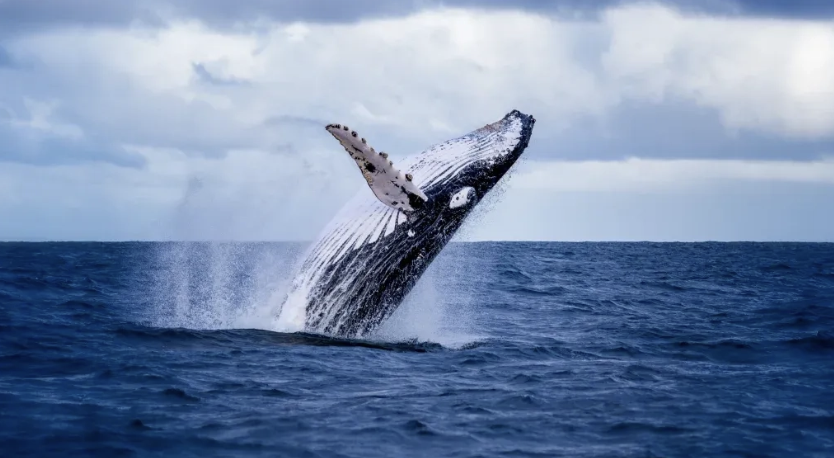
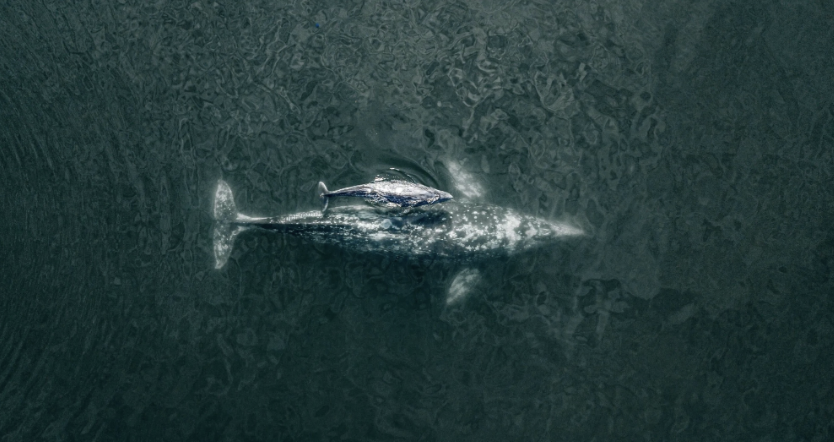
The timing is the whole point. Gray whales come into Laguna Ojo de Liebre to calve, and late February is the peak — the calves are weeks old, curious, and come to the pangas. That lagoon is where Charles Scammon took his ships in December 1857 and started a slaughter that ran until there was nothing left to hunt by 1873. It is now a UNESCO biosphere reserve, and their descendants swim over to be scratched. Make of that what you will.
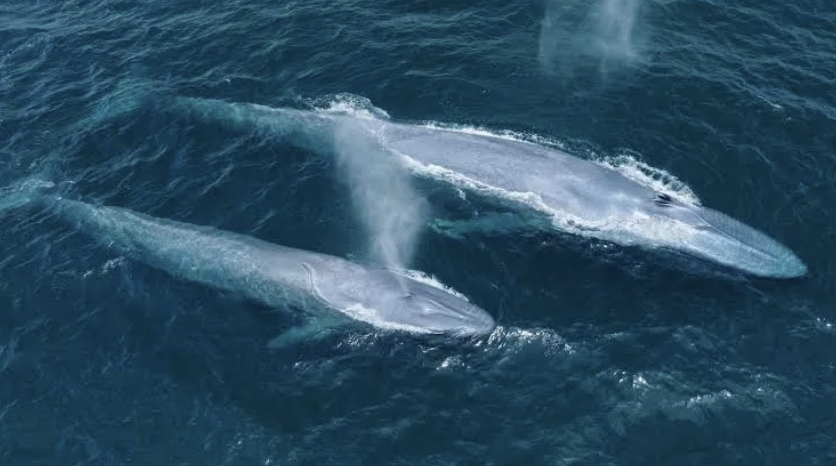
Blue whales are the other one — up to 30 m, the largest animal that has ever existed — and their Loreto season opens in mid-February. These dates sit inside both windows, which is a narrower overlap than it sounds.
We publish trips while we're still building them, because the people who come on them usually have opinions worth hearing. The dates and route are fixed. Pricing is not final — the figure here is close.
Register your interest now and you'll get the confirmed itinerary and final price before anything is due.
Fly into Mexico City and check in. If you've come from our Guatemala trip you land with the group in the afternoon.
Evening free in the Centro Histórico — go and stand in the Zócalo, which has been the middle of this city under three different civilisations. Early night: tomorrow starts at 04:30.
04:30 start, and worth it. You lift off in the dark and the sun comes up over the Pyramids of the Sun and the Moon with thirty other balloons in the air around you.
Then the site on foot along the Avenue of the Dead. The Pyramid of the Moon is open to climbers again; the Pyramid of the Sun is not, and hasn't been since 2020. Back to the city in the afternoon, rest of the day yours.
Morning flight to La Paz on the Sea of Cortez, and the temperature changes completely. Easy afternoon, tacos and tequila in the evening, and a briefing on the road trip ahead.
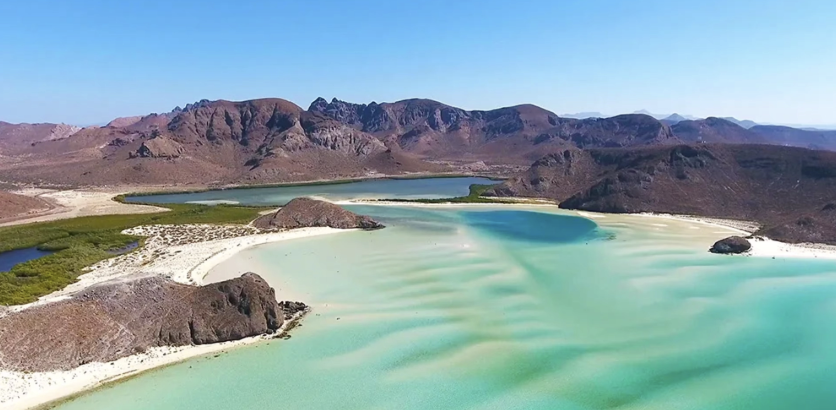
Morning at Playa Balandra — an enclosed turquoise lagoon so shallow you can wade the whole way across it.
Then the first big drive: 350 km north through cardón cactus desert to Loreto, a colonial town that was the first Spanish settlement in the Californias and briefly their capital. Roughly four hours, arriving for dinner.
09:00 boats from the Loreto waterfront out to Isla Coronado, a volcanic island half an hour offshore, to snorkel with the California sea lion colony.
They are entirely unbothered by people. The young ones will come and play with your fins in water clear enough to see the bottom. Back by early afternoon and the evening is yours.
The long push north toward the gray whales, broken neatly in half. Ninety minutes out of Loreto the road drops into Bahía Concepción — giant cactus running straight down to turquoise shallows. We stop properly: swim, sit around, fish tacos on the sand.
Then three and a half hours on to Guerrero Negro, a salt town in the middle of the desert that exists for exactly one reason and is worth the drive for it.
Early start, on the water at 08:00 inside the biosphere reserve. Late February is the peak of the calving season and the lagoon is full of mothers and young.
The calves come to the boats out of what looks a great deal like curiosity, close enough to touch. It is the strangest, best hour of the trip.
Afternoon drive back south to Loreto.
08:00 out into the Sea of Cortez for blue whales — thirty metres of the largest animal that has ever lived, surfacing close enough that you hear the blow before you see it.
Back in, lunch, then the drive south to La Paz and a farewell dinner. Fly out of La Paz that evening, or from Los Cabos the next morning.
Not very. This is the easy trip — boats, short walks, swimming and driving. No climbing, no altitude, nothing technical. If you can get in and out of a small boat and swim comfortably in open water, you're fine.
Around 19 hours across the week, in stretches of four to five hours. Baja is 1,200 km of desert and the good things are spread along it, so the driving is genuinely part of the trip rather than a tax on it. We break the longest day at Bahía Concepción for a swim and lunch.
Nobody can promise an animal. What we can say is that these dates sit at the peak of the gray whale calving season at Ojo de Liebre and inside the blue whale window at Loreto, which is a narrower overlap than it sounds — the whole trip is built around hitting both. Sightings in late February are close to reliable.
Sometimes, and only if the whale decides so. Mothers and calves in the lagoon regularly come alongside the pangas of their own accord, and touching happens on their terms. Boats are strictly regulated inside the reserve and never chase or approach an animal that isn't interested.
Breakfasts and our hosted group dinners are included. The rest you buy yourself — budget around $30 a day. Baja runs on fish tacos and they are excellent.
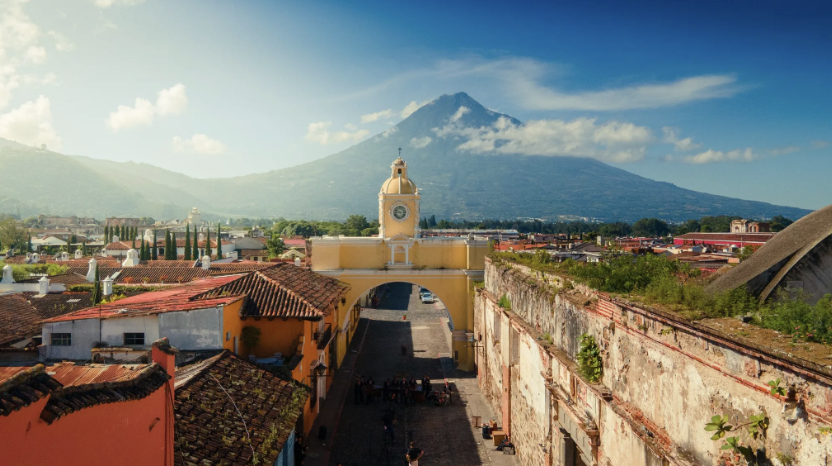
Yes. Our Guatemala trip — Antigua, the Acatenango summit and Lake Atitlán — runs 13–19 February and finishes the day this one starts, with the group flying over together. Booked together the two come to roughly $750 less than separately.
We’re constantly planning new trips. Join our newsletter and be the first to discover upcoming experiences before they’re announced.

Get early access to Apprify and be among the first brokers to try the new standard of mortgage qualification.