join the next adventure
Join a growing network of curious explorers. Get early access to new trips, insider updates, and connect with people who share your drive for adventure.
Guatemala packs an absurd amount into a small space. In six days you get a UNESCO colonial city, an active volcano you sleep in front of, and a lake in a caldera ringed by living Maya towns — and you never drive more than three hours to reach any of it.
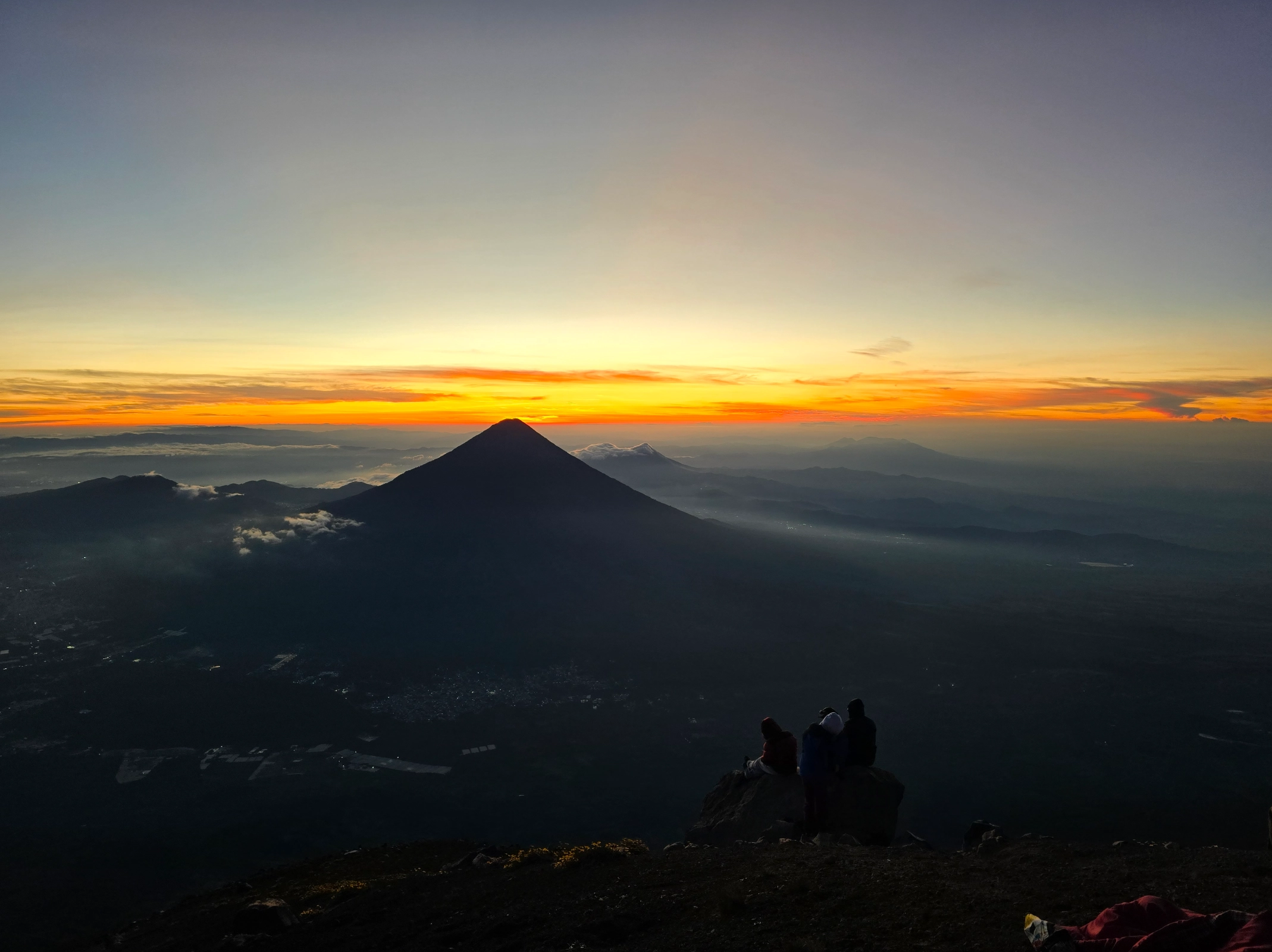
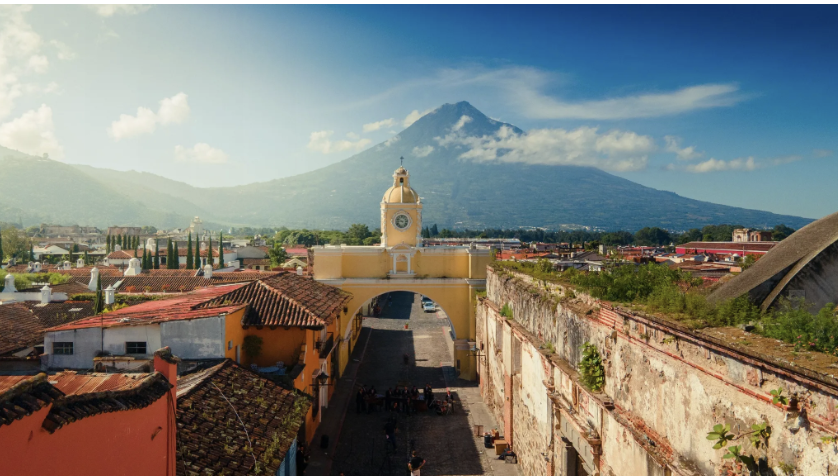
Antigua was the capital of Spanish Central America until an earthquake ended it in 1773 and the government simply moved out, leaving a city of ruined convents under three volcanoes. One of them, Fuego, has been erupting more or less continuously since 2002. You climb its neighbour, Acatenango, and camp on the saddle facing it.
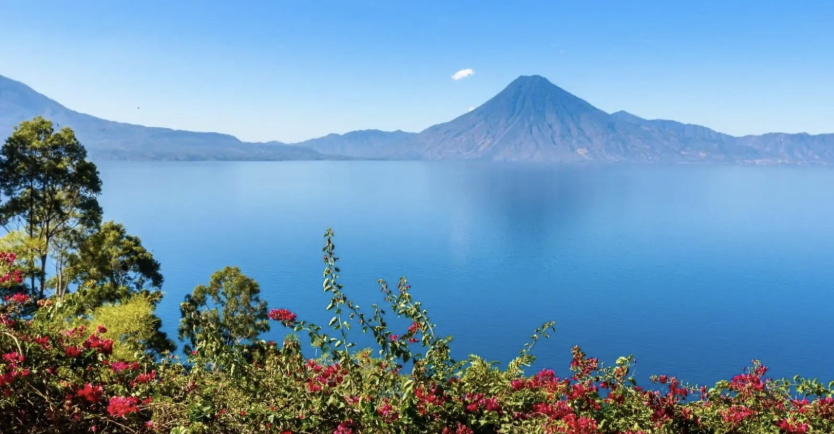
Then Lake Atitlán, sitting in a caldera left by an eruption about 84,000 years ago that threw ash as far as Florida. The villages around it — San Juan, Santiago, San Marcos — are Tz'utujil and Kaqchikel speaking, with Spanish as the second language, and you move between them by boat.
Acatenango is a 5–6 hour climb to a camp at 3,600 m and a 90-minute push before dawn to the 3,976 m summit. No ropes, no technical skill, no previous altitude experience needed — but it is steep, dusty, and genuinely demanding, and you carry your own day pack. Warm gear is rented in Antigua so you don't fly with a down jacket.
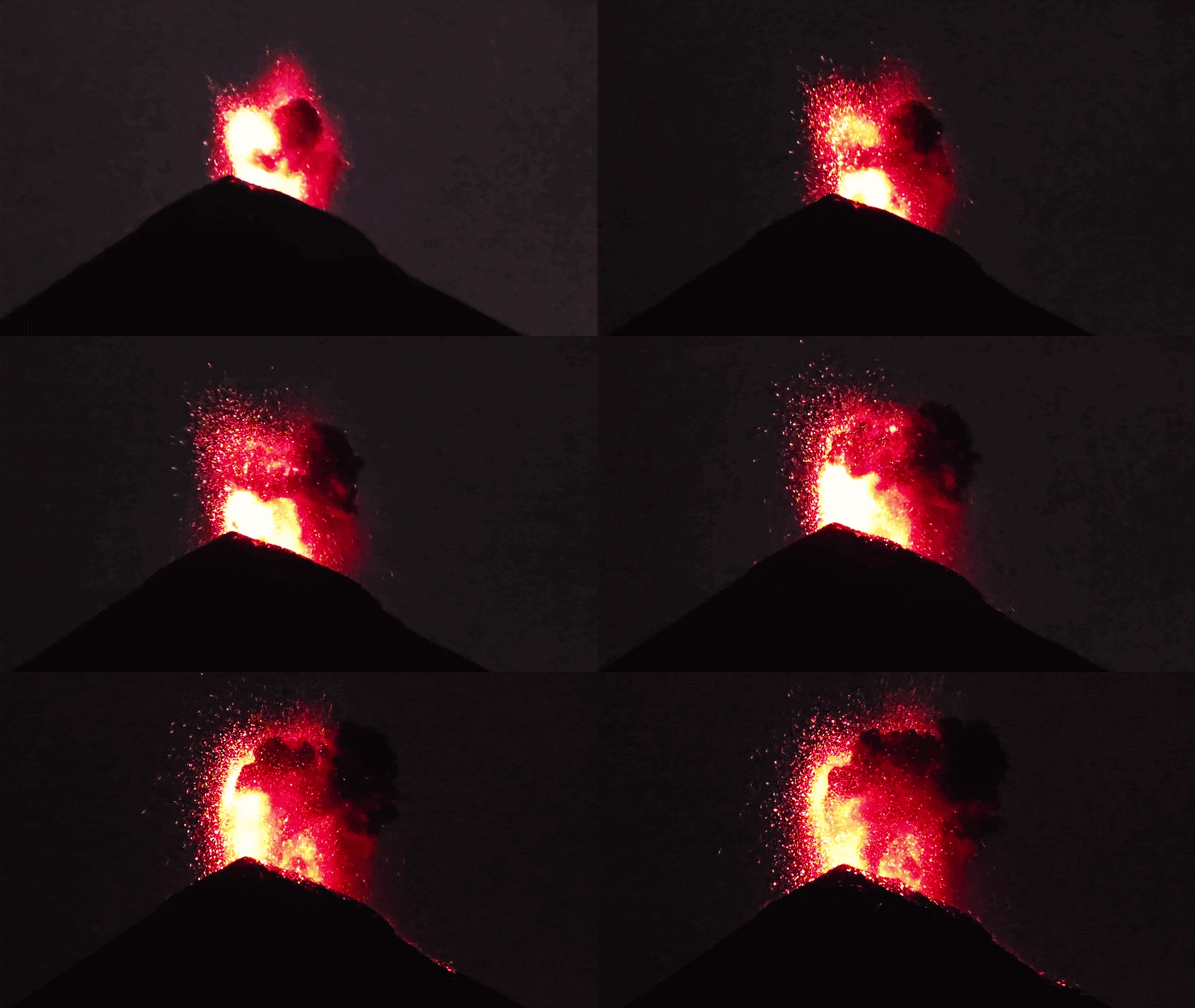
The reward is specific: sitting at camp after dark while Fuego detonates every fifteen or twenty minutes and lava runs visibly down the flank, then a summit sunrise over the whole volcano chain.
This runs back to back with our Baja California whale trip, which starts in Mexico City on 19 February as this one finishes. Do both and you save around $350 against booking them separately — ask us.
We publish trips while we're still building them, because the people who come on them usually have opinions worth hearing.
The dates and routes are fixed. Pricing is not final.
Register your interest now and you'll get the confirmed itinerary and final price before anything is due.
Land at Guatemala City whenever your flight gets in. Private transfer over the ridge to Antigua, about an hour. Nothing scheduled — you're at 1,530 m now and the acclimatisation is already doing its quiet work. Welcome dinner.
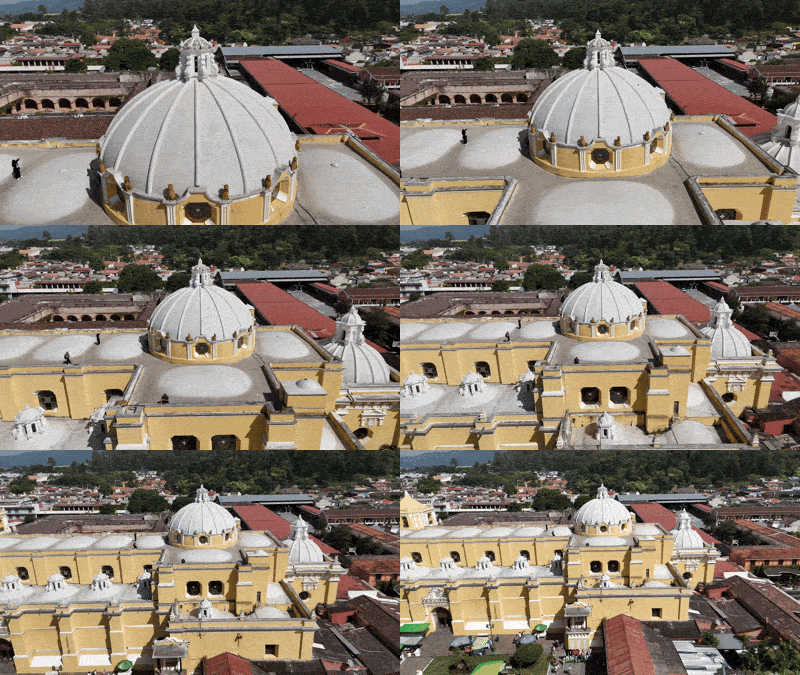
A day in a city that stopped growing in 1773. Cobbles, the Santa Catalina arch, convents that the earthquake opened up and nobody rebuilt, and coffee on rooftops with volcanoes on three sides.
Afternoon gear fitting for tomorrow: down jacket, hat, gloves, headtorch, all rented here so nobody flies with winter kit.
08:00 to the trailhead, then five to six hours of climbing through farmland, cloud forest and alpine meadow. It is steep, it is dusty, and it is the hardest thing on this trip.
Camp faces Fuego across a saddle. It erupts every fifteen or twenty minutes — a crack like thunder, then a grey column. After dark the explosions turn orange and you can watch lava run down the flank from your sleeping bag. Hot dinner, campfire, more stars than you have a use for.
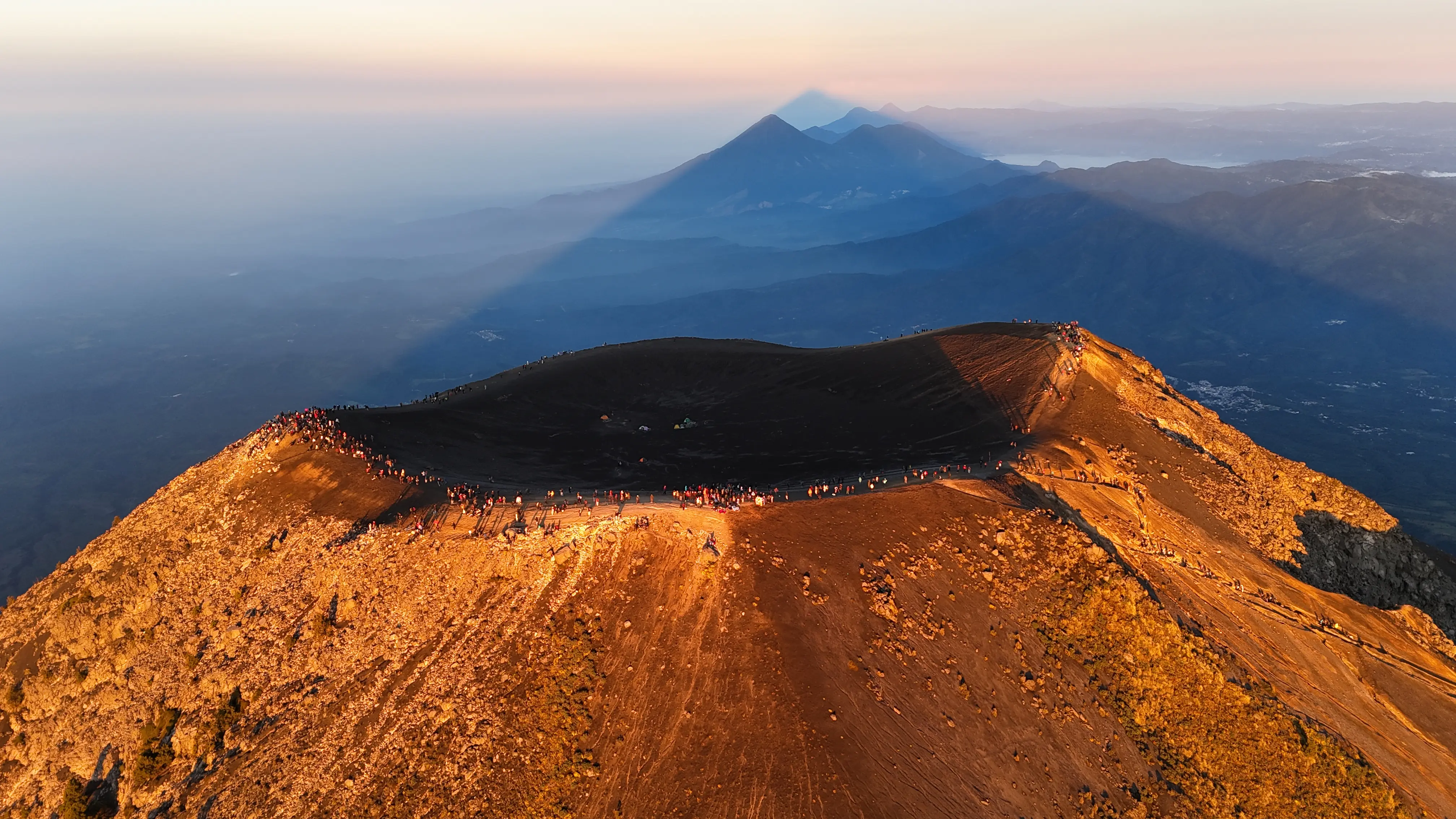
04:30 in the dark for the last 400 m, up loose volcanic ash on a slope that gives back half of every step. Ninety minutes. Then sunrise from the top of Guatemala's third-highest volcano, with the whole chain of them lined up to the west and Fuego still going off below you.
Breakfast at camp, three hours down, back in Antigua by afternoon. Best shower of your life, then a celebration dinner.
Private bus over the highlands to Panajachel, about three hours. Afternoon on the water and the first proper look at the three volcanoes standing across the lake.
The whole day belongs to the lake — a full day by private boat between the villages on the far shores. San Juan for the weaving co-operatives, Santiago, San Marcos. Tz'utujil and Kaqchikel are what people actually speak here; Spanish is the second language.
Back to Panajachel in the evening.
Morning bus down to Guatemala City and flights home from GUA.
If you're carrying on to Baja, this is the day you fly to Mexico City with the rest of the group.
Fit enough for one long uphill day. Acatenango is 5–6 hours of climbing to camp and another 90 minutes to the summit before dawn, on loose ground at altitude, carrying a day pack. No technical skill and no previous altitude experience needed. If you can walk uphill for six hours you can do this.
You sleep two nights at 1,530 m in Antigua before going to a camp at 3,600 m and a summit at 3,976 m. That is the standard Acatenango profile and thousands of people do it every month, but it is a fast gain and some people feel it. Our guides carry oxygen and turning back is always an option — the trip continues either way.
One night at an established base camp at 3,600 m, in tents or wooden cabins, facing Fuego. It is basic — no shower, no plumbing — and it is the single best night of the trip. Hot dinner and breakfast are cooked on the mountain, and down jackets, hats and gloves are rented in Antigua so you don't fly with winter kit.
Mandatory, and it must cover trekking to 4,000 m. Acatenango is 3,976 m and a lot of standard policies quietly cap altitude cover at 2,500 or 3,000 m, which would leave you uninsured on the one day it matters. Send us the policy and we'll check it.
It happens. Fuego's activity closed hikes near Antigua for 48 hours in August 2026 before the authorities reopened them. February is dry season with the best conditions of the year, and we build contingency into the trip — but an active volcano is an active volcano, and we will always take the official closure over the itinerary.
Yes. Our Baja California whale trip starts in Mexico City on 19 February, the day this one ends, and you fly there with the group. Booked together the two come to roughly $750 less than booking them separately — tell us when you register.
Yes. Acatenango runs on days 3 and 4, so you can join for the first four days — arrive on the 13th, climb on the 15th, summit at dawn on the 16th, and fly home from Guatemala City on the 17th while the rest of the group carries on to Lake Atitlán.
Worth knowing before you decide: it comes out around $500 less than the full six days, and those two extra days include a private boat day between the Maya villages on the lake. Most people who ask about this end up staying. But if a long weekend is what you have, tell us when you register and we'll price it for you.
We’re constantly planning new trips. Join our newsletter and be the first to discover upcoming experiences before they’re announced.

Get early access to Apprify and be among the first brokers to try the new standard of mortgage qualification.