Marmolada is the highest mountain in the Dolomites – 3,343 m of glacier and rock, and some of the last remaining ice in the range that's disappearing every year. We’re climbing it this Summer. Together with the IFMGA guides, a via ferrata warm-up in fascinating Tridentina, a night on top of Marmolada, and a Grand Finale dinner back in the valley.
Paragliding, e-bikes, and other additional experiences are optional.
Excellent fitness is required. Apline experience is highly recommended.
Make your way to Colfosco by late afternoon.
Venice, Verona, Innsbruck, and Munich airports all work. Check into the hotel, meet the group, pick up your Geeks Go Peaks kit, and join the welcome dinner in Corvara. Evening briefing covers the week ahead: weather, gear, and a look at the map.
→ Objective: land, settle in, and meet the people you’re climbing with.
A day of hiking to get lungs and legs used to altitude. Three options depending on energy:
- the Sassongher circuit (2,665 m, ridge views of the whole Sella Group).
Dinner together — Alpine-Mediterranean, garden herbs, wide windows.
→ Objective: legs warmed up, elevation up to 2,600 m, group gelled.
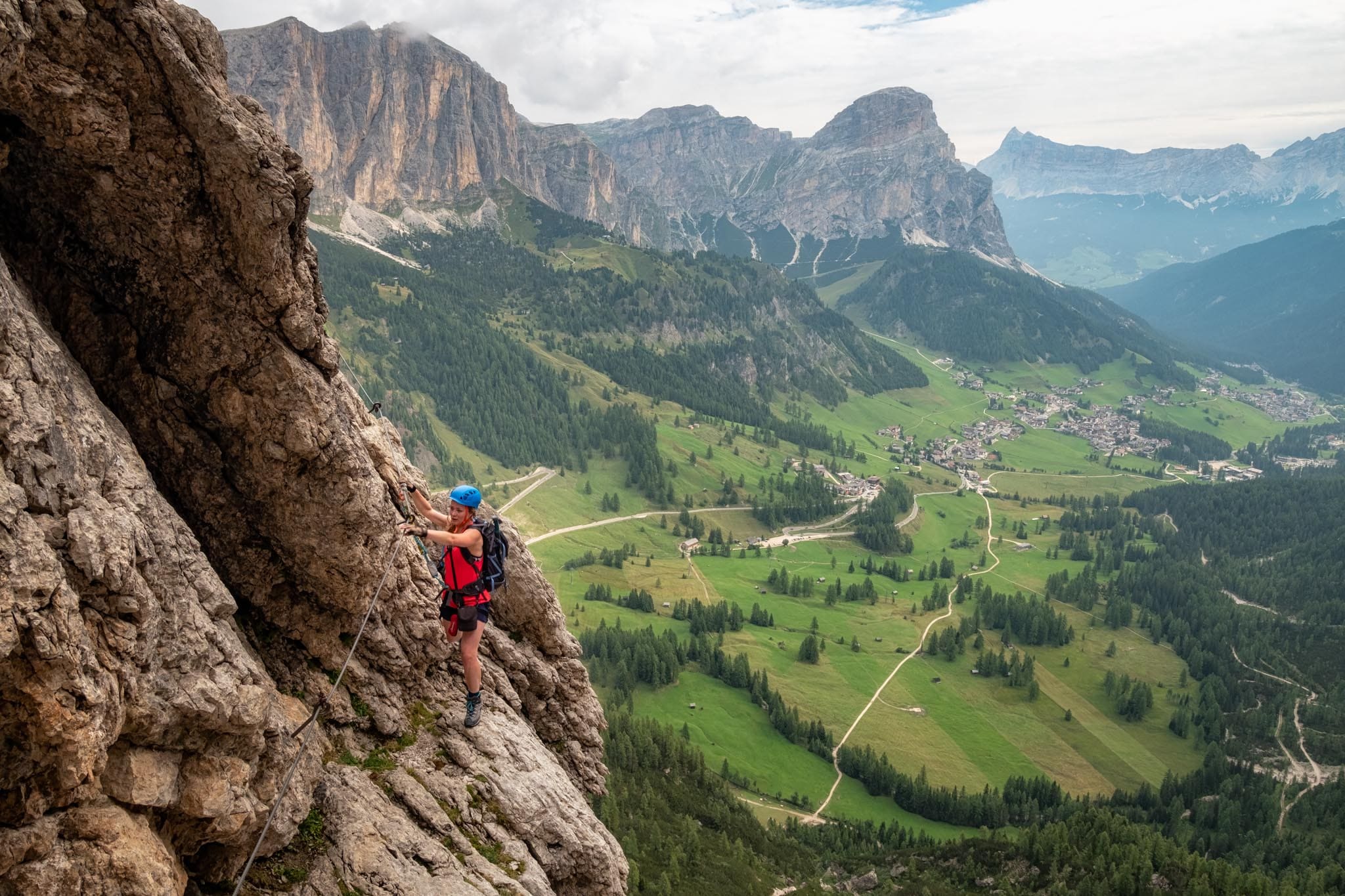
Via Ferrata Tridentina — a classic Sella line with a famous suspension bridge.
Afternoon: drive to Passo Fedaia and check into Rifugio Castiglioni. Meet your IFMGA guides for the briefing, dinner, early sleep.
→ Objective: first real climbing day, then into position for the summit.
Dawn breakfast at Castiglioni.
Rope up on the Marmolada glacier, cross the crevasse fields, and climb the equipped rock (the roccette) and the final ridge — to the summit cross at 3,343 m. +1,286 m of vertical.
Then the best part: we sleep at Capanna Punta Penia, the highest hut in the Dolomites. No running water, with amenities outside, and very little comfort. Yet the view to the Alps stretching from Austria to the Adriatic is worth it.
→ Objective: stand on the roof of the Dolomites, then sleep on it.
Sunrise at 3,343 m.
Above the clouds if we’re lucky. Then the descent — back across the glacier, down the moraine, to the cars at Passo Fedaia, and the drive back to Alta Badia.
Evening: farewell dinner at one of the most stunning restaurants.
→ Objective: come down, clean up, feast.
Checkout. Transfers back to the airport or onward travel.
For those extending their stay in the Dolomites — mountain biking, paragliding, climbing, or just more time in the valley — we’re happy to point you in the right direction.
→ Objective: go home, start planning the next one.

The Marmolada summit involves around 1,300 m of vertical gain and 6–8 hours of continuous effort at altitude, starting above 2,000 m. You don't need to be a professional athlete, but you do need a solid aerobic base — think: you can hike uphill for 1–2 hours without stopping, you run or cycle regularly, and a long day in the mountains doesn't wreck you for a week.
Concretely: if you can run 5 km comfortably, or you've done multi-day hiking trips with significant elevation, you're in the right territory. If mountains are totally new to you, we'd recommend building up in the months before.
The goal is a solid aerobic base and legs that are used to sustained effort. The most useful things you can do:
Start 2 months out if you're building from scratch. If you're already active, a focused 6–8 week block is usually enough.
Prior alpine experience is recommended but not mandatory. The via ferrata on Day 3 serves as both a warm-up and practical preparation for the summit — you'll get comfortable with exposure, fixed ropes, and movement on steep terrain before the big day.
For the summit itself, you'll need to walk in crampons (a motor skill that's learnable, the guides will be showing you this), tolerate significant exposure, and sustain effort over a long day. Our IFMGA-certified guides will lead the way – but we'll all need to walk it. :)
If you're unsure whether your background is sufficient, reach out.
Mandatory:
If you don’t have something – it’s always possible to purchase or rent there.
Provided by GGP:
Optional:
A one-way van transfer is available from Venice Marco Polo airport for an additional €180 per person . If you're making your own way to Alta Badia, we're happy to share logistics details.
The final call on route and conditions is made by our IFMGA guides on the day. If the glacier route is unstable, we may take the West Ridge via ferrata alternative — equally spectacular, technically more reliable in warm conditions. If summit conditions are unsafe, the guides will make the call. Safety is non-negotiable; the itinerary is built with contingency in mind.
Breakfasts at hotels and rifugios, plus lunches and dinners with a minimum of two courses per person. Alcoholic beverages are not included.
We’re constantly planning new trips. Join our newsletter and be the first to discover upcoming experiences before they’re announced.
Get early access to Apprify and be among the first brokers to try the new standard of mortgage qualification.