join the next adventure
Join a growing network of curious explorers. Get early access to new trips, insider updates, and connect with people who share your drive for adventure.
Our logic is simple: when you can go to Chamonix, why wouldn't you go to Chamonix?
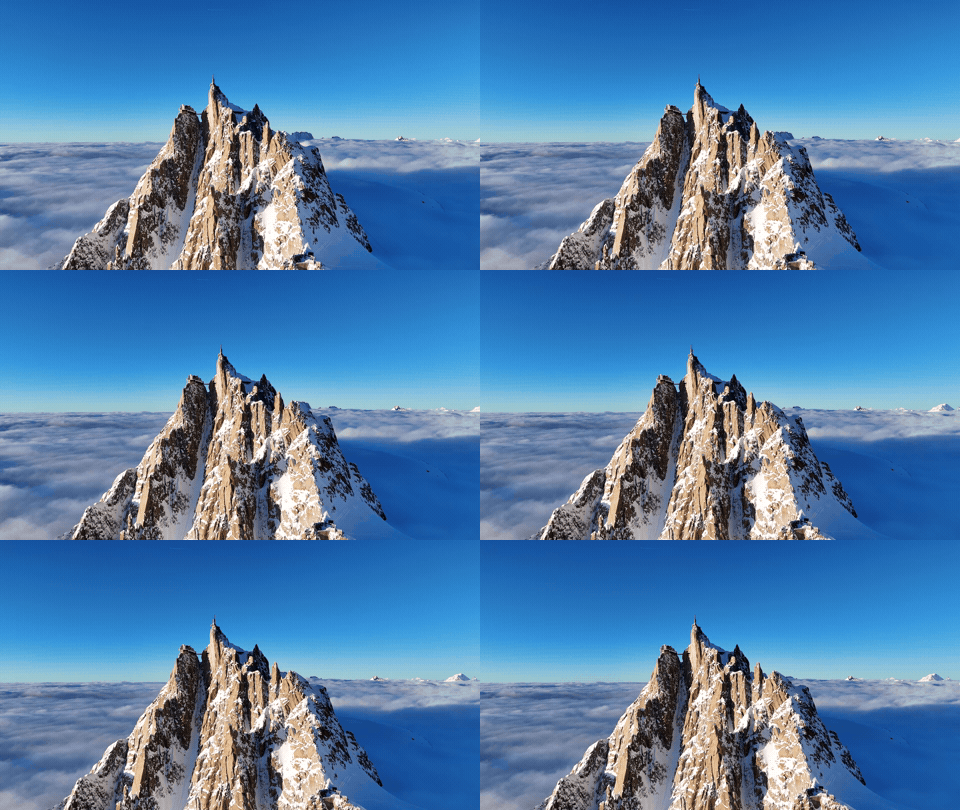
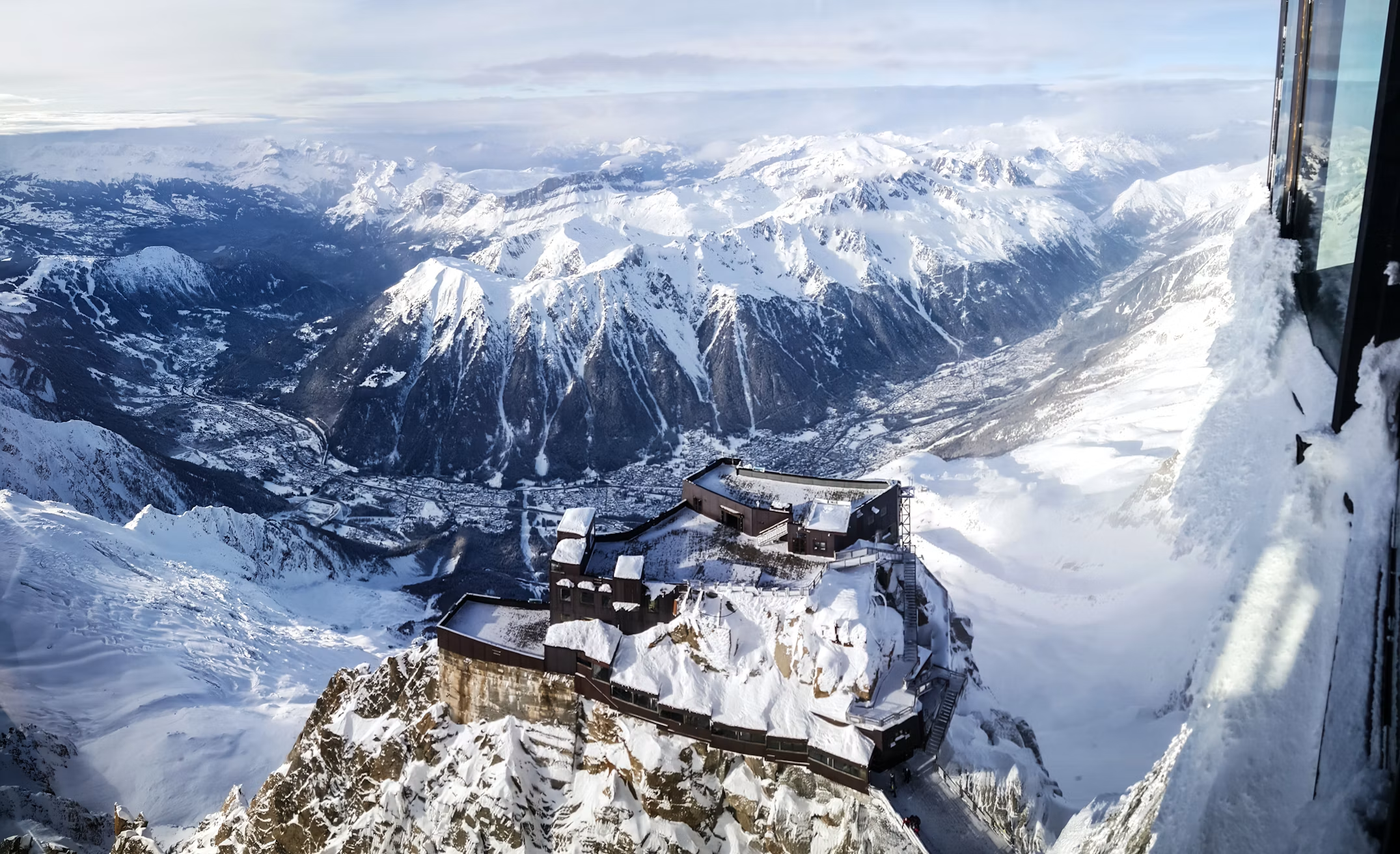
So here's the plan. We fly to Geneva on the Friday, and by Saturday afternoon we're sleeping in a hut at 3,613 metres with Mont Blanc more or less outside the window. Sunday we get up at half four, walk twenty minutes across a glacier in the dark, and climb a 350-metre ribbon of ice called the Chéré Couloir — while everybody else is still queuing for the first cable car down in the valley.
That's the whole reason for the hut, by the way. The Chéré is one of the most popular ice routes in the massif, and its biggest hazard isn't the climbing — it's ice knocked loose by the parties above you. Sleeping twenty minutes from the base means we're on it empty, an hour and a half before anyone else arrives.
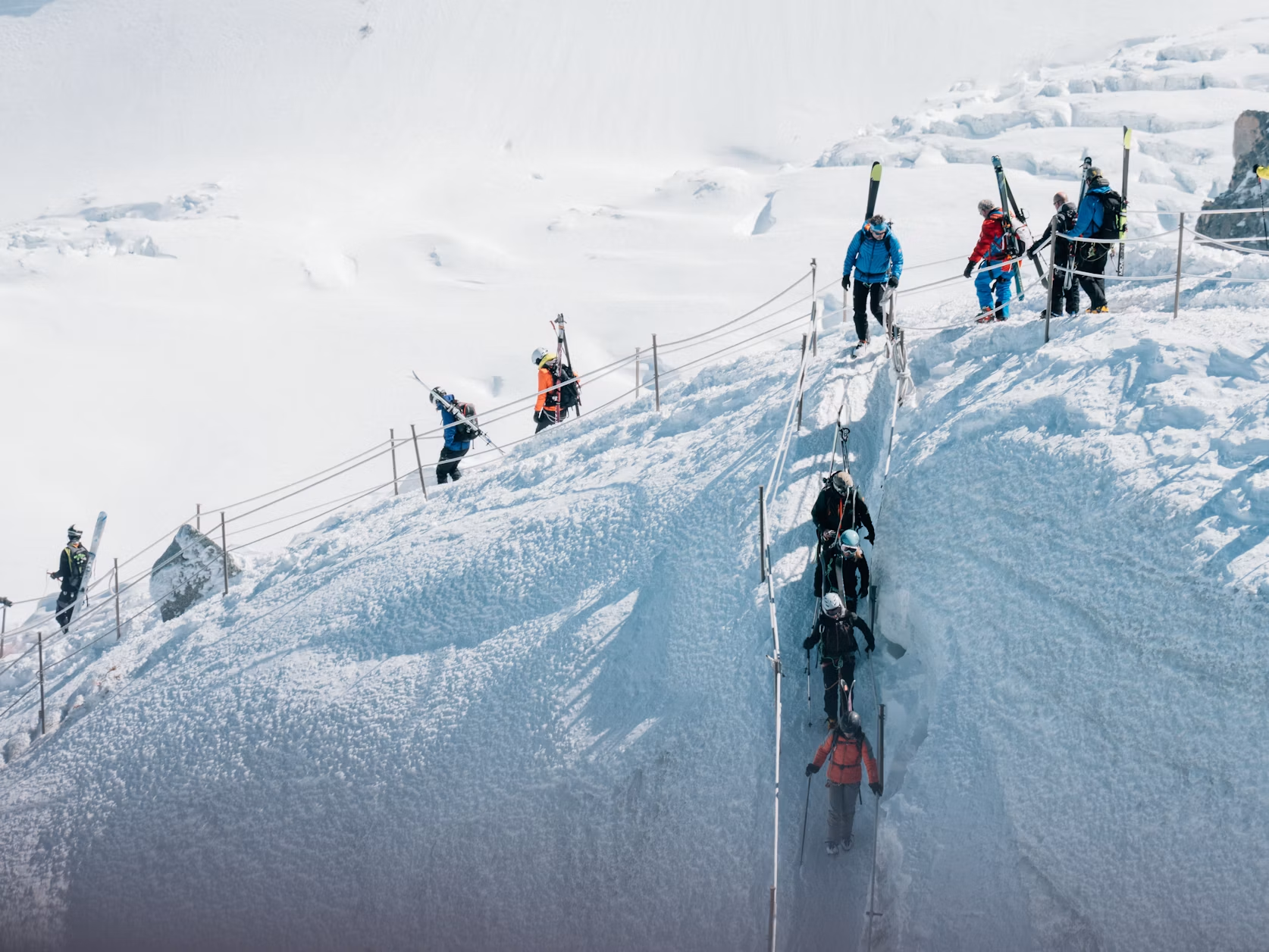
Then, and this is the bit that makes people laugh when you describe it out loud, we put skis on and come home. Down the Vallée Blanche. Twenty kilometres, 2,800 metres of descent, off-piste on a glacier, all the way back into town.
One more thing worth saying: our guide is Gerrit Egnew, and he's a geek. Data engineer at Interlaken by day, he's a certified IFMGA guides when the adventure calls. Some of our members already had an adventure with him in Chamonix last year. It was excellent, and that's the point where we stopped wondering whether we'd scouted the right person. So we're building these adventures with him now — for you.
Do you need to be an ice climber? No. If you've climbed outdoors on rock and you're comfortable skiing off-piste in snow that hasn't been groomed for you, you've got what you need. Saturday morning is a proper skills session — transceiver drills, tool technique, rope work — and the guides watch everyone ski before a single decision gets made. Two guests per guide on the ice — the guide is flat about that. On the skills-and-skiing day the ratio opens up to one guide for six, which is how those days are meant to run.
Do you need to be fit? Reasonably, yes. There's almost no hiking involved, but you want to be someone who could put in 1,200 metres of ascent in a day and still enjoy dinner.
Six spots. Three IFMGA guides. One very good weekend.
I mean, c'mon. It's one of the most epic playgrounds for adventurous geeks like us — and it fits in a long weekend.
Private transfer from Geneva, about an hour and a quarter. Check in, then straight to the rental shop so nobody discovers their crampons don't fit at 5am on a glacier. Guides walk everyone through the route and the weather picture. Welcome dinner in town.
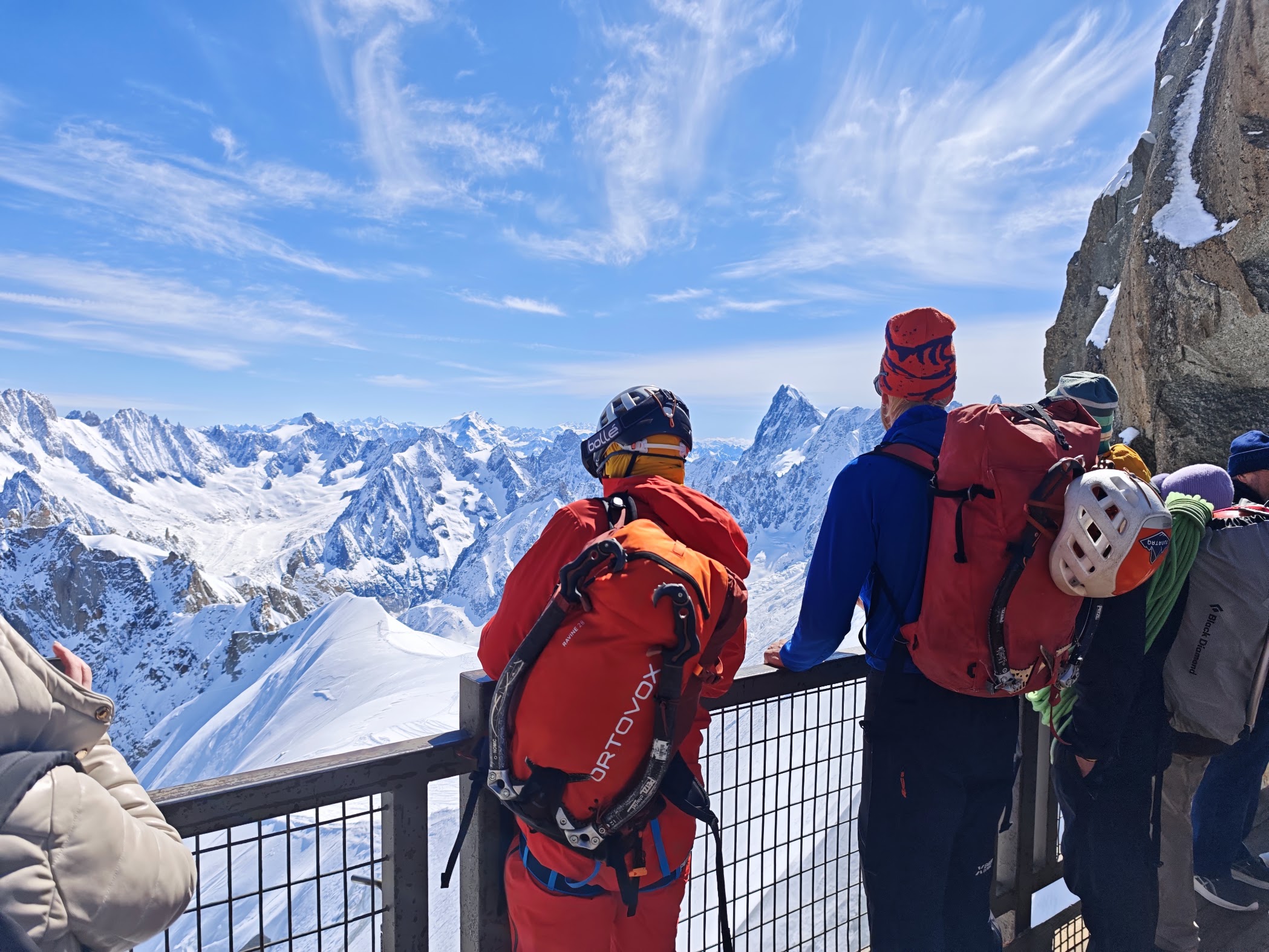
Morning in the valley with the lead guide, one to six: transceiver drills, then off-piste laps so he can read everyone's skiing before committing to the Vallée Blanche. Early afternoon, up the Aiguille du Midi with hut kit, down the arête, twenty minutes across the Col du Midi to the Refuge des Cosmiques. The other two guides come up to sleep at the hut. Ice-tool and rope-work session on the ice below the Triangle while the light goes orange. Dinner at 18:30, bed early.
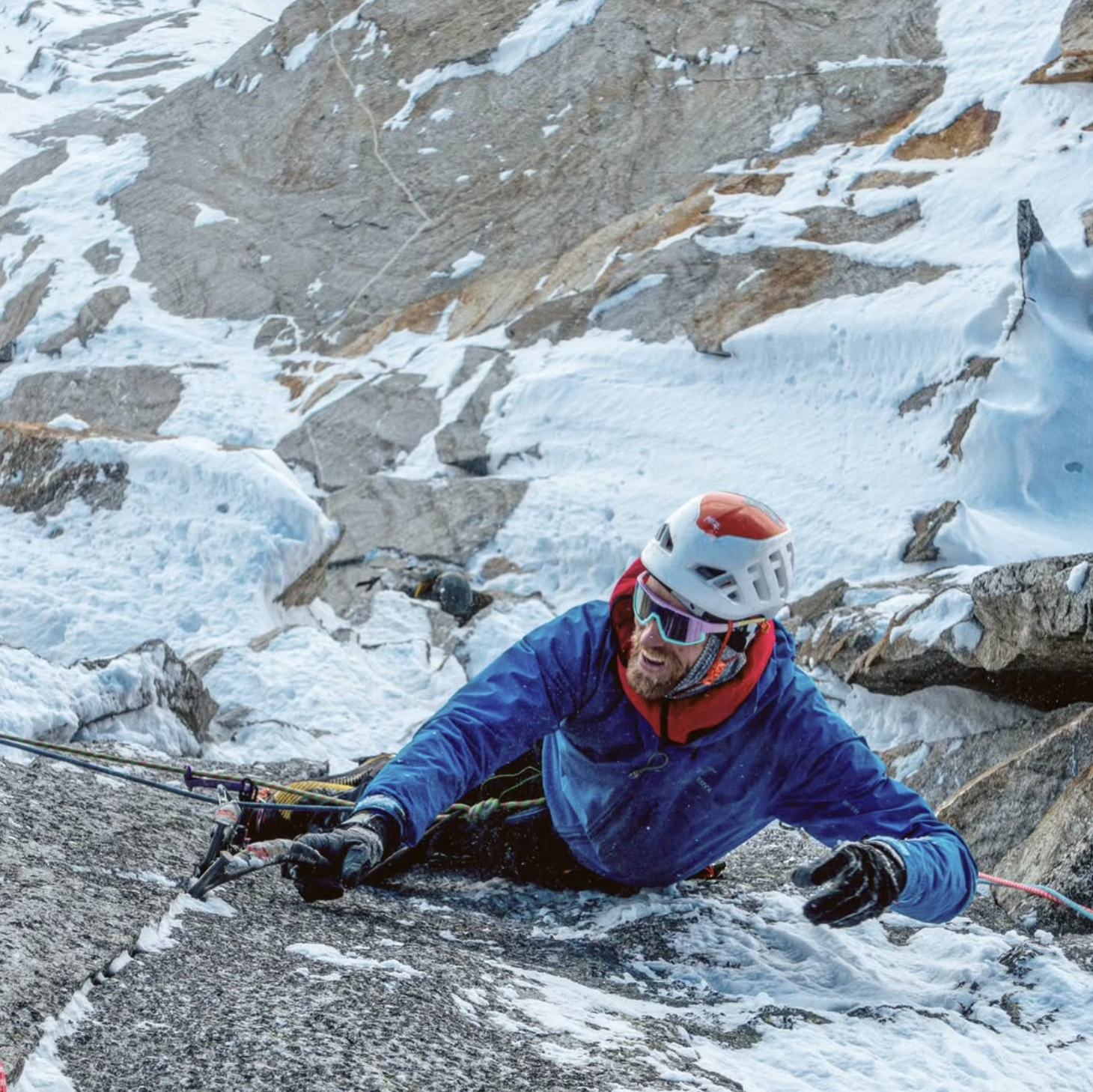
Breakfast at 04:30. Three ropes of two. Teams leave thirty minutes apart and are on the route at first light, ninety minutes ahead of the first cable car. Five or six pitches, ice between 45° and 85°, fixed rappel stations back down the line. Regroup at the Col du Midi around 11:00, click into skis, and ski the Vallée Blanche home. Celebration dinner, thoroughly earned.
Booked, not hoped for. If Sunday got blown out, this is the second attempt and the guides are already there. If it delivered: slow morning, spa, optional valley off-piste on your lift pass, transfer to Geneva.
Monday is the backup and it's already booked and paid for. If both Sunday and Monday go, we ski instead — which in Chamonix in March is not exactly a punishment. What we won't do is push a marginal day on a serac-exposed face. The guide's call is final and we back it every time.
Steep — the crux pitch runs to about 85°, which is near-vertical for a stretch. But you're on a rope with an IFMGA guide two metres away, on a route with fixed anchors, and there are only two of you per guide. It's demanding, not reckless.
It's off-piste on a glacier, so it's about confidence in variable snow rather than technical difficulty — think a black run you could ski happily in whatever the mountain gives you. It's long, it's glaciated, and it's one of the great descents in the Alps.
Two reasons, and they're the same reason. On ice the guide will take two guests and no more, so six means three ropes — and three ropes can leave the hut staggered and all be through the crux before the crowds arrive. Four teams stack up and start dropping ice on each other. Six is also the number he calls the sweet spot for a skills day. Everything lines up at six.
There's very little walking, but the fitness standard is real: you should be able to cover 1,200 m of ascent in a day. Four hours of ice climbing at 3,600 m asks a lot of your shoulders and your lungs.
We sleep one night at 3,613 m, which is high enough to notice and not high enough to be a problem for most people. Tell us on the form if you've had trouble at altitude before and the guides plan around it.
Yes, and take €135 off the price if you're bringing skis and boots. Technical ice kit we'd rather supply — the guides want to know exactly what everyone is climbing on.
We’re constantly planning new trips. Join our newsletter and be the first to discover upcoming experiences before they’re announced.

Get early access to Apprify and be among the first brokers to try the new standard of mortgage qualification.